

There are a lot of free flower patterns online, and plenty of them are lovely to look at and frustrating to stitch. The ones below are from independent designers who explain how they stitched their own version, which is what makes a free pattern genuinely useful.
None of these designs are mine, and every pattern is downloaded from the designer’s own site, so the links go straight to their posts. I’ve noted the main stitches and anything I’d do the same way.
Every project below was made and photographed by the maker named under its photo. The photos are theirs, shown with credit and a link to the original post, where you’ll find the full instructions.
1. “Go where the wild flowers grow”
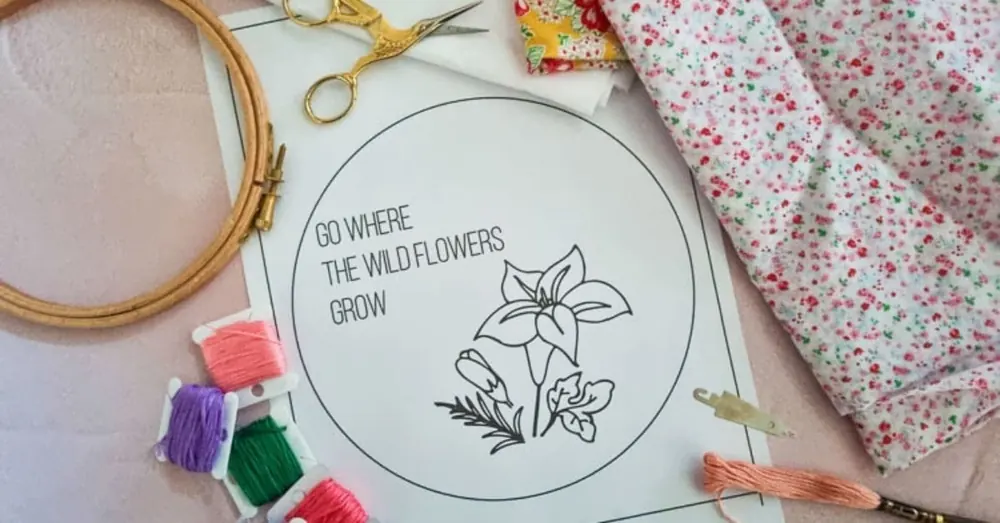
Ruth Cartwright’s wildflower design pairs a loose bunch of flowers with a hand-lettered phrase. The free PDF prints on A4 and is sized for a 7-inch hoop, and the post explains how to trace it with light behind the hoop and a water-soluble pen.
Her stitch plan is simple and effective: chain stitch for the words, back stitch for the flowers and stem stitch for the stems, with at least two strands so the lines have some body. She chose soft pinks and spring greens, but it would look just as good in whatever your stash has.
See the project on Craft with Cartwright
2. A pot of wildflowers with a butterfly
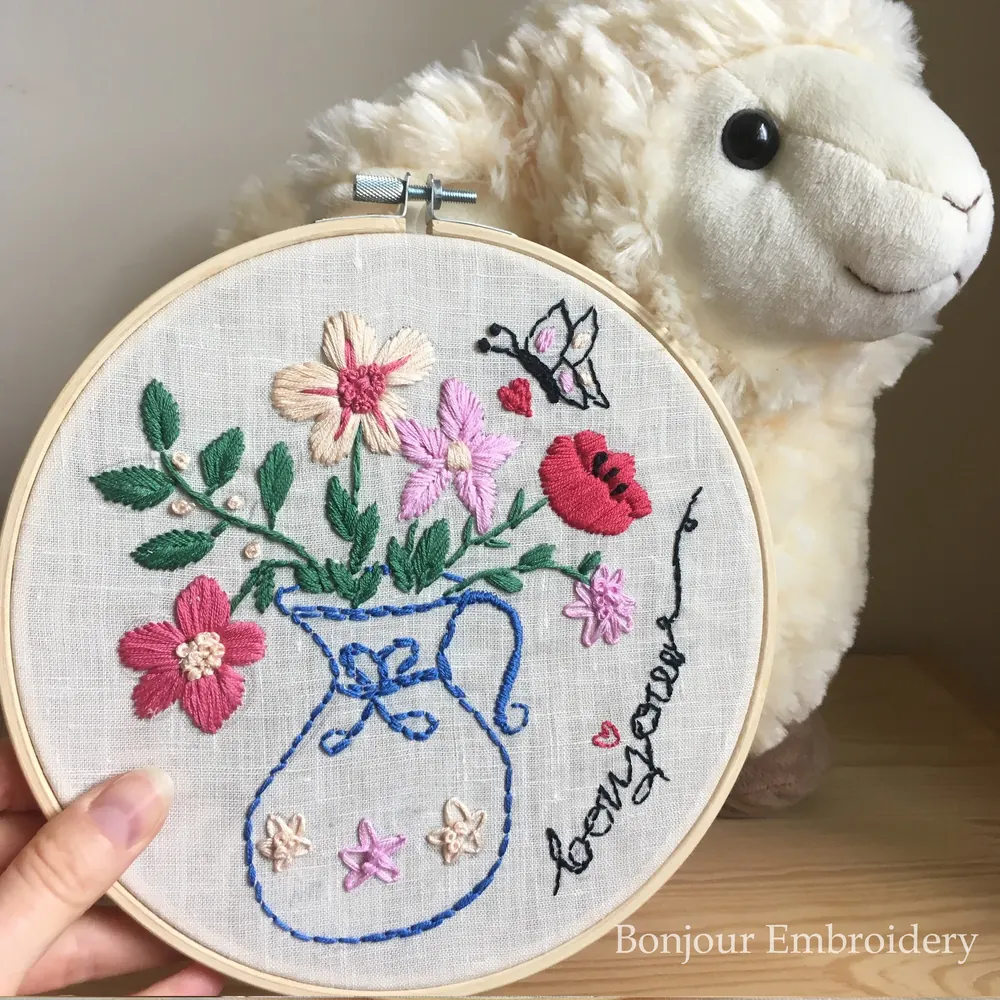
Pati’s free “Wild Flowers” pattern is a cheerful pot of flowers with a small butterfly and the word bonjour. The leaves are fishbone stitch, the flowers mostly satin stitch with some lazy daisies, and the pot is outlined in back stitch.
What makes this one easy to follow is the matching video on her YouTube channel, which goes through it in the order she stitched it: leaves first, then the flowers, then the pot and the finishing details. Watching someone fill a petal is often clearer than any written description.
See the project on Bonjour Embroidery
3. Grasses and eucalyptus stitch-along
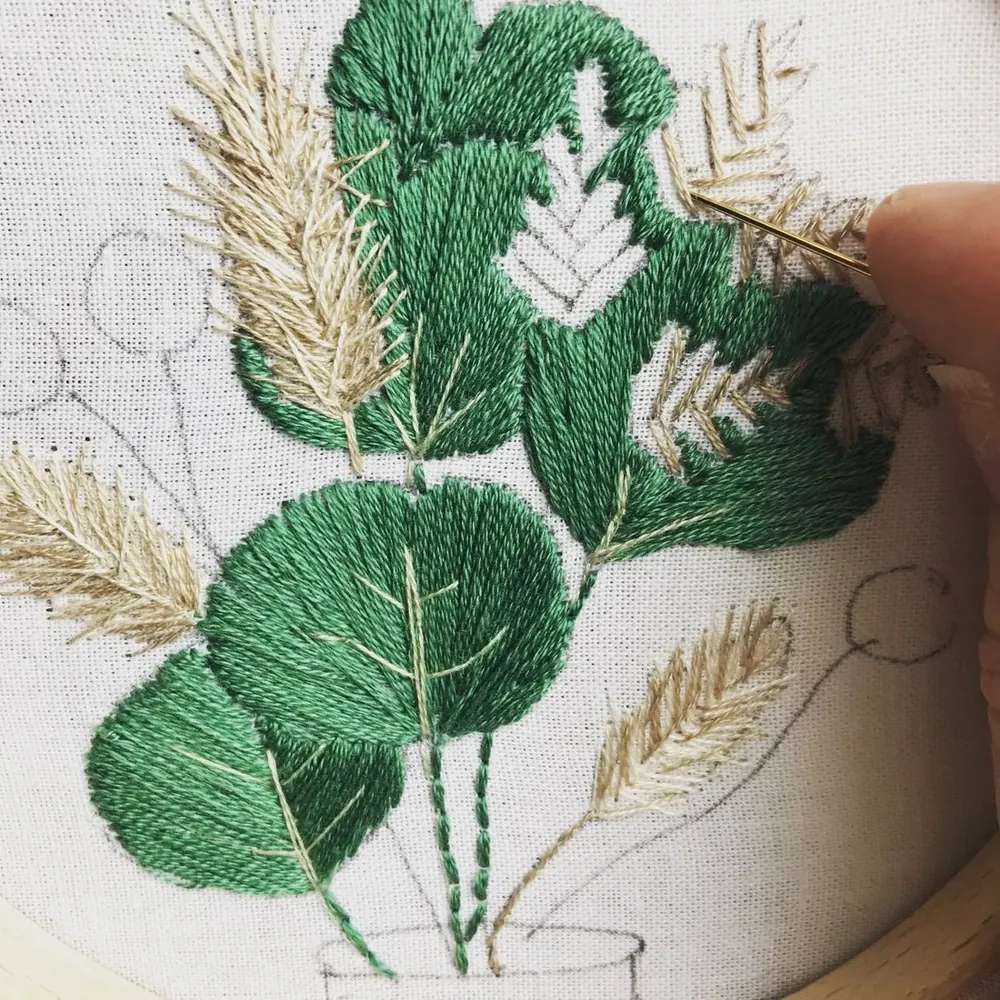
Louisa at Stitch Happy filmed this as a live stitch-along during the 2020 lockdown, in four weekly videos recorded at home. It’s more botanical than flowery: soft eucalyptus leaves and feathery grasses in a 5-inch hoop.
The weekly format makes it a good pick if you like being guided step by step. Her materials list is specific (six DMC colors and fabric about an inch bigger than the hoop), and she suggests scaling the pattern on a computer if your hoop is a different size.
See the project on Stitch Happy
4. Lavender in a woven basket
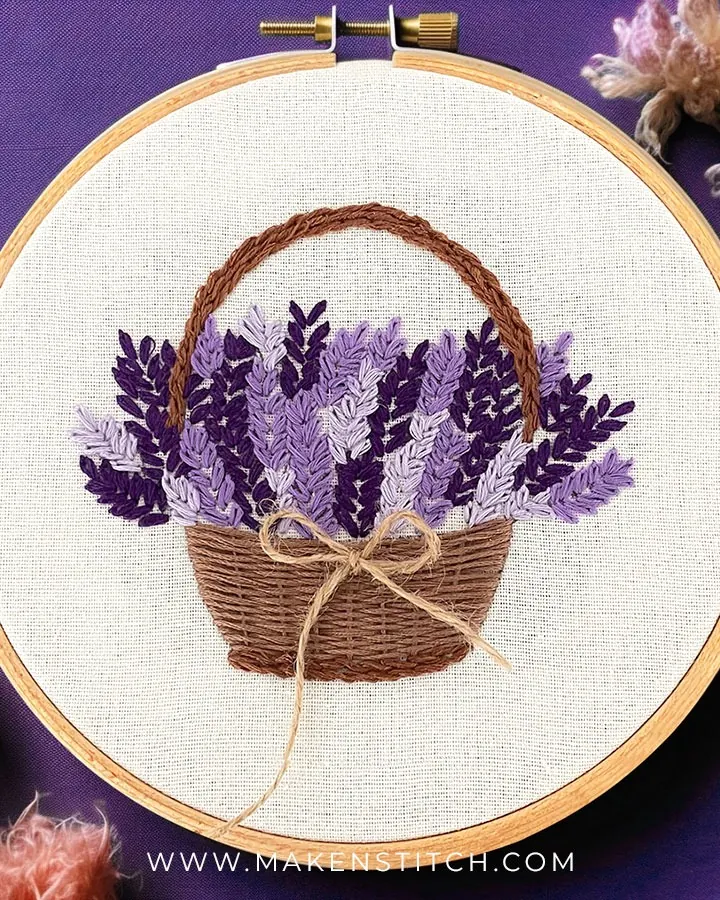
Gabriela’s lavender basket is a lesson in texture. The basket is worked in basket weave stitch, the lavender stems in stem and outline stitch, and the flowers in lazy daisies, with a real jute twine bow tied on at the end.
The post walks through each part in order with a video, and the color palette is included. If you’ve only done line work so far, the basket is a satisfying first try at a woven fill, and it’s very forgiving.
See the project on Makenstitch
5. A circle of lavender with bees
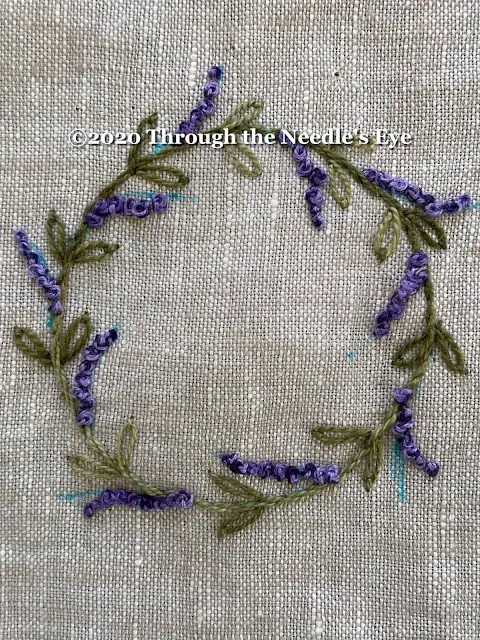
Kara’s free lavender circle is small and versatile: she stitched it for a sachet, and suggests a hand towel or ornament too. Two little bees in black and variegated gold sit in the wreath.
I like her solution to a common problem. She didn’t have the right purple, so she combined two strands of a lighter purple with one of a darker shade, which gave the lavender more depth than either color alone. It’s a trick worth keeping in mind for any flower.
See the project on Telling Stories Through the Needle’s Eye
6. A lavender miniature in two stitches
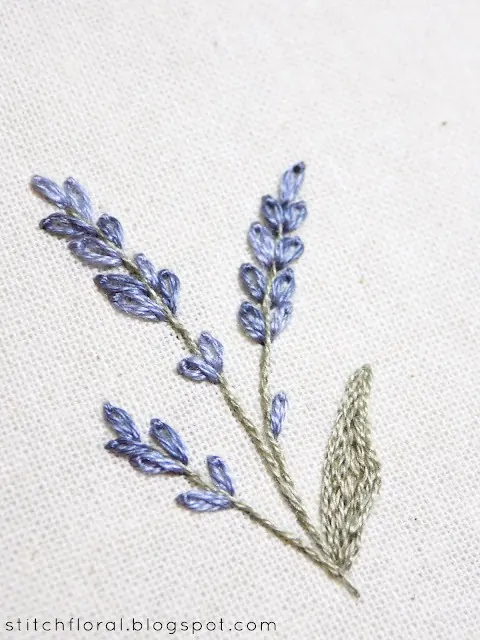
This lavender sprig is part of a series of embroidered miniatures, and it’s the simplest of the set: split stitch for the stems and lazy daisy stitches for the flowers. The PDF pattern is linked at the end of the post.
The stems are worked in a single strand, which can feel too thin while you’re stitching but suits the delicate design once it’s done. If single-strand split stitch is fiddly, the post says you can swap in any line stitch you’re comfortable with.
See the project on Stitch Floral
7. Lily of the valley with a vintage feel
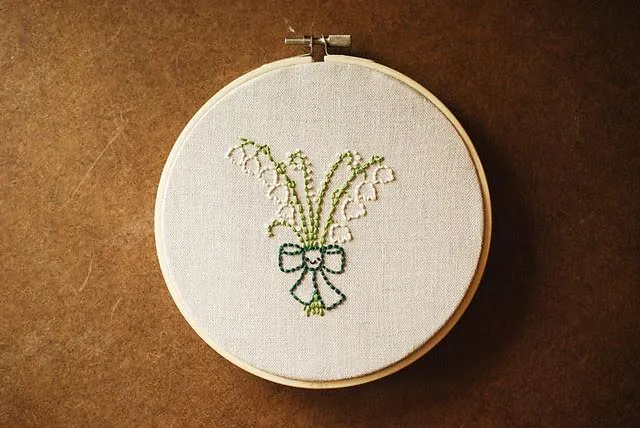
Mollie Johanson’s lily of the valley pattern was inspired by vintage embroidery, with a modern twist: chunky back stitch in all six strands for most of the design, and three strands for the French knot buds and the little smiling face on the bow.
Using six strands is an easy way to make simple back stitch look bold and deliberate, and it covers transfer lines well. She suggests it for a tea towel or apron, and she made hers into a mug rug.
Before you pick a pattern
Most of these use the same handful of stitches, and my comparison of lazy daisy, French knot and satin stitch helps you decide which to use where. For smoother filled petals, see how to satin stitch petals without gaps, and if you want to change the colors, choosing a thread palette shows how to keep flowers from looking flat.
