

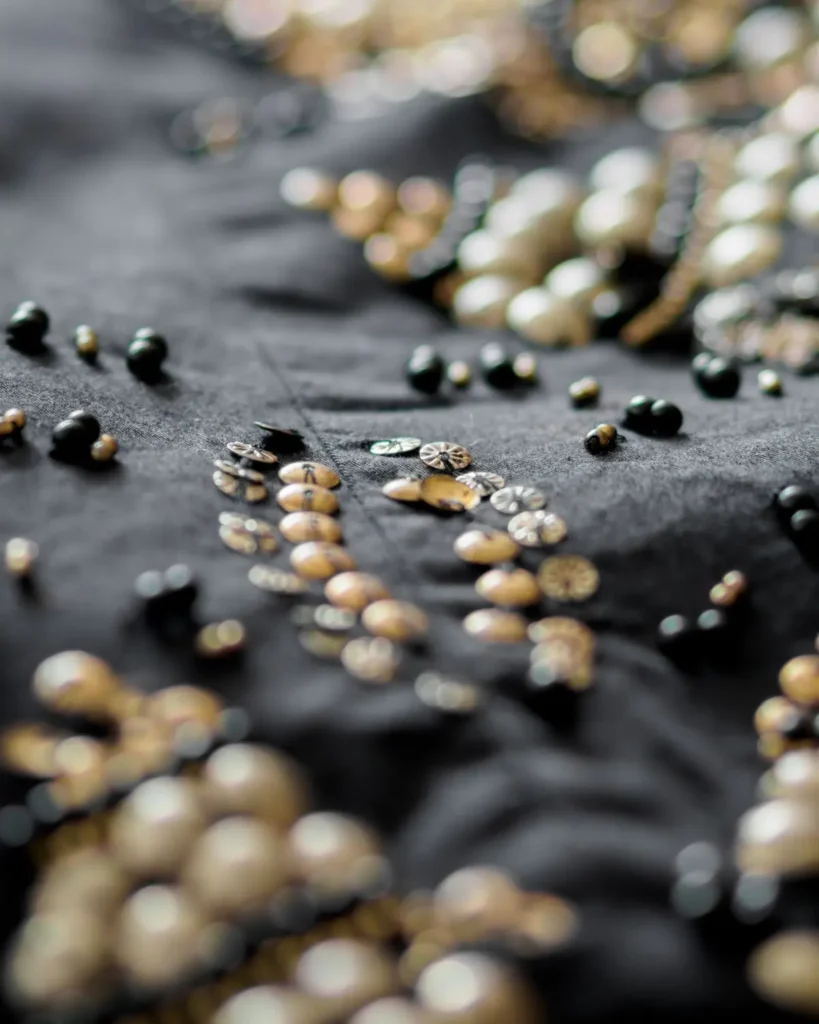
Beaded embroidery is sturdier than it looks, but it doesn’t like the same treatment as ordinary embroidery. Beads can scratch, chip or lose their finish, sequins can curl with heat, and the weight of the beads puts strain on fabric that’s folded or hung the wrong way.
This guide covers how to clean a beaded piece, how to press around beads, and how to store finished work so it stays in good condition. If you’re still choosing beads for a project, the guide to seed beads, bugle beads and sequins is the place to start.
What you’ll need
- Mild liquid detergent (a wool or delicates wash works well)
- A clean basin and cool water
- Two or three plain white towels
- A pressing cloth (a thin cotton cloth or handkerchief)
- Acid-free tissue paper for storage
- A cotton bag or pillowcase, or a flat box
Before you wash anything: test the beads
Not all beads are colorfast. Dyed beads, color-lined beads (where the color is on the inside of a clear bead), painted beads and metallic or galvanized finishes can fade, bleed or rub off when they get wet. Many sequins are plastic and can soften or curl with heat.
If you still have spares from the project, put one of each type in a glass of warm water with a drop of detergent for half an hour, then rub it on a white paper towel. If the color comes off, avoid washing the piece and spot clean it instead. If you don’t have spares, test on the least visible bead on the back or edge.
Spot cleaning comes first
Most beaded embroidery never needs a full wash. For dust, a soft brush or a hairdryer on cool held at a distance does a lot. For a small mark, dampen a cotton bud or a corner of a white cloth with water and a little detergent, dab the mark without rubbing over the beads, then dab again with plain water.
How to hand wash beaded embroidery
- Fill a basin with cool water and a small amount of mild detergent, mixed in before the piece goes in.
- Lay the piece in flat and press it gently under the water. Don’t rub, scrub or twist it, because beads rubbing against each other can chip or scratch.
- Let it soak for 10 to 15 minutes, then lift it out supported from underneath so the wet weight doesn’t pull on the stitching.
- Rinse in clean cool water the same way until no suds remain.
- Lay it on a white towel, roll the towel up loosely to press the water out, and unroll. Never wring it.
- Dry it flat on a dry towel, face up, out of direct sun and away from radiators. Reshape the fabric while it’s damp.
Avoid the washing machine and the tumble dryer for beaded pieces, even on a gentle cycle. The tumbling breaks beads and wears through the thread holding them. For beaded clothing, the same advice in my guide to washing embroidered clothes applies, only more so.
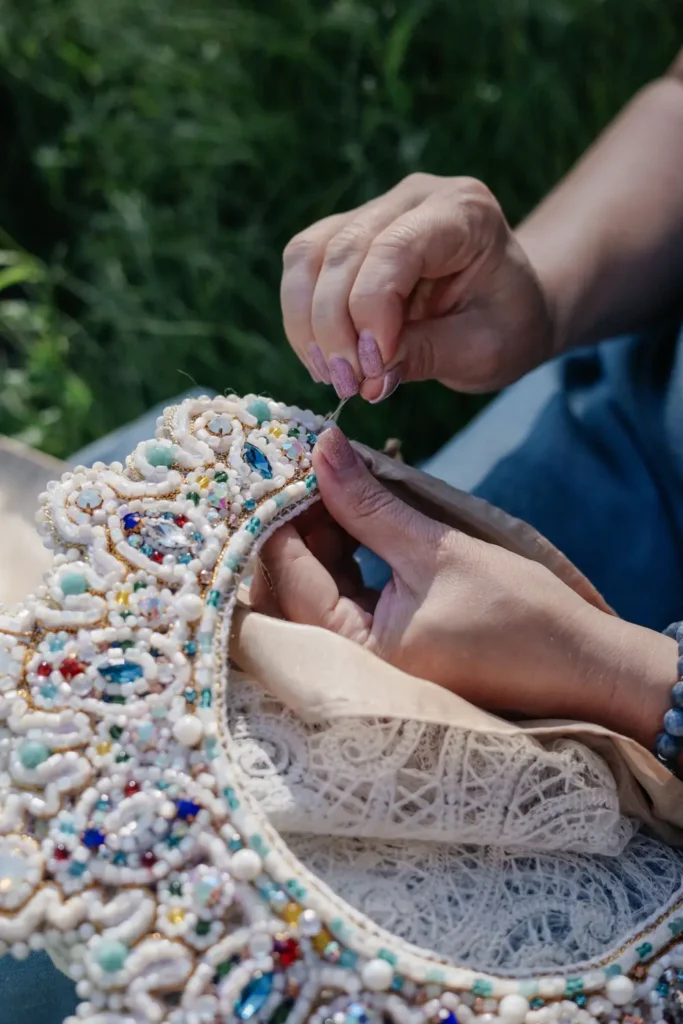
Pressing around beads
Never put an iron directly on beads or sequins. Heat can melt plastic sequins, dull some bead finishes and leave marks on the fabric where the iron rides over the bumps.
Instead, fold a thick towel into a soft pad, lay the embroidery face down on it so the beads sink into the towel, cover the back with a pressing cloth, and press (lift and lower, don’t slide) with a low to medium iron. Press only the areas of plain fabric if the beading is dense. A handheld steamer held a few inches away is another option for creases around beadwork.
Storing finished beaded pieces
Store flat where you can
Beads are heavy compared with fabric, and a beaded piece that hangs for months can stretch. Store flat pieces in a box between layers of acid-free tissue, with the beaded side up.
Roll instead of folding
If something is too large to store flat, roll it around a cardboard tube covered in tissue, with the beaded side facing out. A fold that runs across a line of beads strains the thread and can leave a permanent crease or a gap.
Beaded clothing
Fold beaded garments with tissue in the folds and keep them in a drawer or box rather than on a hanger. If a garment has to hang, use a padded hanger and support the weight so it isn’t all on the shoulders.
Framed hoops and wall pieces
Keep beaded hoops out of direct sunlight, which fades both thread and dyed beads. Dust them with a soft brush now and then.
Fixing loose beads before they fall off
Check beaded pieces before washing and after wearing. A single loose bead usually means the thread around it is worn or the knot has slipped. Secure it straight away: thread a beading needle, anchor the new thread in the back a short distance away, and stitch back through the loose bead and its neighbors a couple of times before tying off. My beginner’s guide to bead embroidery explains back stitching through a line of beads.
Troubleshooting
The color has bled onto the fabric
Rinse immediately in cool water until the water runs clear, and dry flat. Don’t use heat, which can set the dye. Next time, test the beads first or spot clean only.
Sequins have curled or gone cloudy
This usually comes from heat or very hot water. Curled sequins rarely flatten again completely; the easiest fix is to replace them.
There’s a gap where beads have come off
Match the size and finish as closely as you can and stitch the replacements in with beading thread. A slightly different bead in the middle of a fill is far less noticeable than a gap.
FAQ
Can I dry clean beaded embroidery?
Some dry cleaners handle beaded garments, but solvents can damage some bead finishes and sequins. Ask before you hand it over, and point out what the beads are made of if you know.
Does beading thread rot over time?
Nylon and polyester beading threads last well. Cotton thread is weaker and more likely to wear through against glass, which is one reason to use proper beading thread from the start.
How do I keep beaded pieces from tarnishing?
Metal and metallic-finish beads can tarnish in damp air. Store them dry, wrapped in acid-free tissue, and keep them away from rubber bands and some foams, which can contain sulfur.
