


I like to do some embroidery when I want to slow down a bit.
It is a quiet way to make something nice without needing a lot of space or tools.
Here are some cute ideas that have a calm feel to them.
They focus on simple designs that look good and help pass the time in a steady way.
I have tried a few of these myself and they work well for everyday projects.
Sleepy Moon with Stars and Dots

A crescent moon in golden yellow thread with simple stitched eyes anchors this design, while three pale gray stars and small yellow dots fill the space around it in a loose arrangement. The motif stays compact enough to fit inside a standard 6-inch hoop or transfer directly onto fabric for a pouch or jacket patch. Neutral background fabric lets the two thread colors stand out without extra outlining or fills.
What makes this idea useful is how the loose placement of stars and dots leaves room for easy resizing or repositioning on different items. You can drop the same moon onto a baby blanket corner or a denim jacket sleeve by shrinking the scale and swapping the gray thread for navy. The limited color palette also means quick thread changes if you want to match existing bedding or clothing.
Rain Cloud on a Denim Pocket

A small smiling cloud with blue cheeks and simple raindrops makes a good motif for the back pocket of jeans. The design sits centered on the pocket flap and uses blue and off-white thread to stand out against light-wash denim. The compact size keeps the stitching contained while the downward raindrops create a clear visual flow across the fabric. This approach works well for personalizing pants, shorts, or jackets that get regular wear.
What makes this idea useful is how the pocket already provides a ready-made border that frames the motif. You can shift the same cloud to a jacket cuff or tote bag corner if you want it on a different item. Changing the thread colors to match a darker denim or adding a few extra drops lets the design adapt without much extra planning. The small scale also means it finishes quickly and stays practical for clothing rather than larger hoop projects.
Delicate Wildflower Cluster on a Canvas Tote

A compact bouquet of daisies and leafy stems makes a clean motif when stitched onto the lower half of a canvas tote bag. The flowers sit slightly off-center with a few scattered dots and small beads to add light texture. Soft pink and muted green threads keep the design from feeling heavy on the pale fabric. This layout works especially well on bags or pouches because the motif stays small enough to avoid interfering with daily use.
What makes this idea useful is how the loose arrangement can shift to a jacket pocket or the corner of a notebook cover without needing major changes. You could swap the pink threads for blues or yellows to match different bag colors while keeping the same stem layout. The off-center placement leaves most of the tote blank, which helps it stay practical for carrying things. A design this size also translates quickly to patches if you want to test it on multiple items first.
Hummingbird Motif on a Shirt Collar

A small hummingbird worked in soft green and pink threads sits on the pointed collar of a mint button-up shirt. The compact size keeps the design from competing with the rest of the garment while the light color palette blends into the fabric rather than standing out sharply. Placement on the collar works because the fabric stays mostly flat during stitching and the finished bird shows when the collar is worn turned up or slightly open. This approach fits best on button-down shirts, blouses, or lightweight jackets where a single small motif can add detail without covering large areas.
The placement does a lot of the work here since the collar already creates a natural frame and lets the embroidery move with the garment. The same bird could shift to a cuff, pocket flap, or the edge of a tote bag if you want to try it on a different item. Swapping the thread colors to match the shirt fabric more closely would make the design even quieter, while using slightly darker shades would increase visibility. Small collar motifs like this also work well as a low-commitment test before moving the design to something larger.
Daisy Motifs Spaced on a Scrunchie

Embroidering small daisies with white petals, yellow centers, and short green stems creates a repeating pattern around a gathered fabric scrunchie. The flowers sit evenly spaced along the outer edge so the design stays visible when the scrunchie is worn or relaxed. This placement works especially well on accessories because the embroidery stays low-profile and does not catch on hair.
The spaced layout makes the motif easy to adjust for different scrunchie widths or fabric weights. You could repeat the same flowers on a headband or swap the petal color to match a favorite outfit. A design like this stands out on Pinterest because the clean repeat reads clearly even in small thumbnail photos.
Potted Fern on Napkins or Tea Towels

A compact potted fern makes a strong motif for napkins, tea towels, or other small linens. The design keeps the plant contained in one area with layered green threads forming the fronds and a simple basket texture on the pot. Placing it slightly off-center on the folded fabric lets the motif sit fully visible when the item is stacked or used flat on a table.
What makes this idea useful is how the contained shape transfers easily to other flat items like a hand towel or a cloth bag. You can shrink the whole plant to fit a pocket or enlarge the fronds alone if you want to cover more space on a larger towel. Switching the pot to a solid color or using just two green tones keeps the stitching quick while the layered leaves still give the design depth.
Sleeping Fox Motif for Pillow Covers
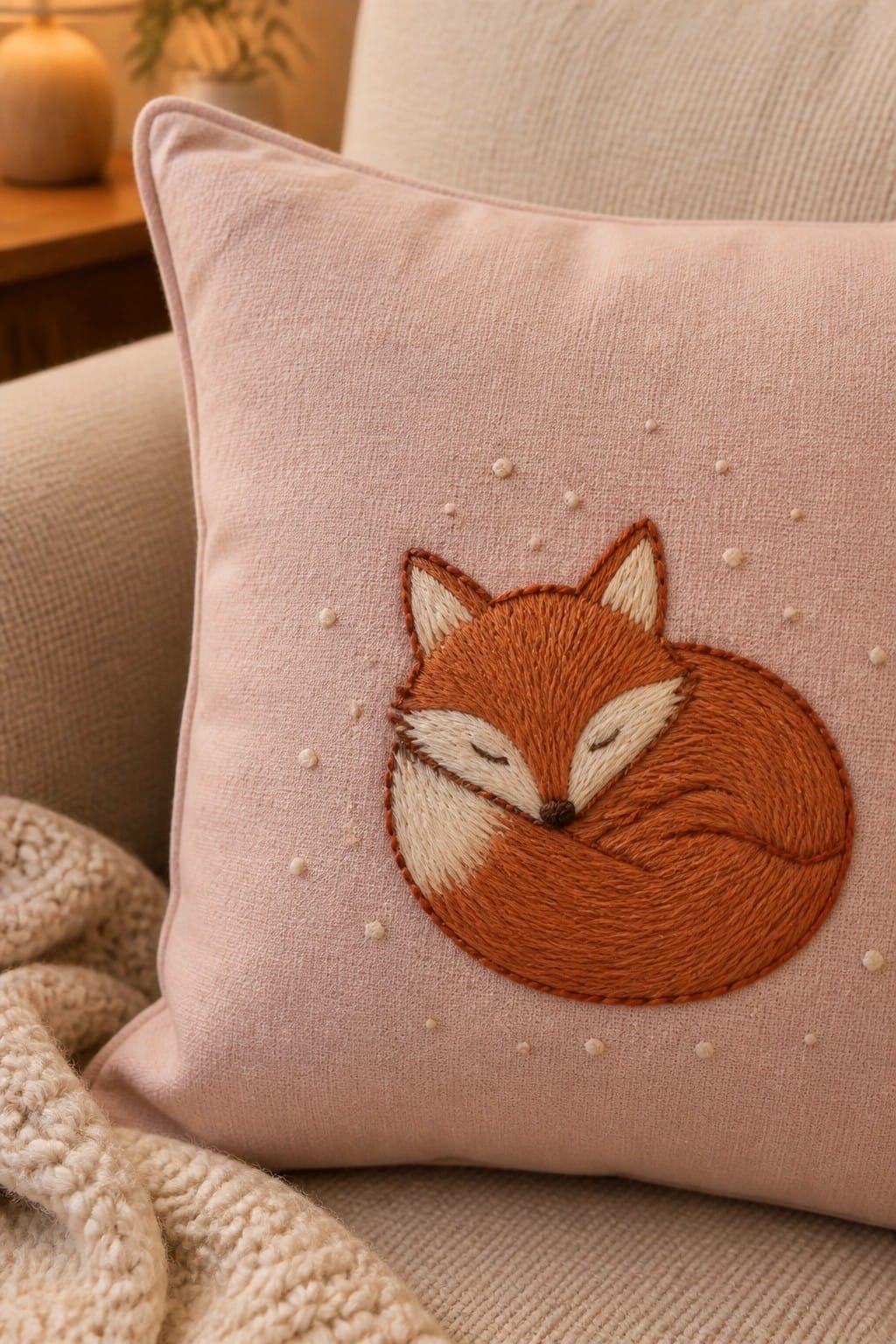
A curled sleeping fox makes a strong central design on a pillow cover because the compact round shape fills the space without needing extra elements. The fox is built from dense orange stitching for the back and head, with cream sections for the face and ears to create clear contrast. Small dots scattered around the animal keep the layout balanced and prevent the center from feeling too heavy. This approach works best on cushions, throws, or other flat fabric items where the embroidery sits in the middle of the piece.
What makes this idea useful is how the tight fox shape adapts to different sizes without losing detail. You can shrink it for a pocket on a bag or enlarge it slightly for a baby blanket while keeping the same dot layout around the edges. Switching the background to a cooler color like sage green would change the mood while the orange and cream threads stay the same. The design also photographs cleanly for Pinterest because the main shape reads well even at small thumbnail sizes.
Mug and Lavender on a Kitchen Towel

Embroider a small coffee mug with simple steam swirls beside a compact bunch of lavender stems on the lower half of a plain towel. The design sits above a thin horizontal line that acts as a base, keeping the whole motif contained and balanced. The placement leaves plenty of open fabric above for actual use while the two elements sit side by side without overlapping. This works best on tea towels, hand towels, or small kitchen linens where the scale stays modest.
What makes this idea useful is how the narrow vertical shape fits neatly on the front of a folded towel without getting in the way. You could swap the lavender for rosemary or thyme to match different kitchen themes, or shrink the whole motif to fit a corner on a set of napkins. Changing the mug color to match existing dishware keeps the look coordinated without extra work. The design also transfers easily to the edge of an apron or the pocket of a canvas tote if you want to move it off towels.
Scattered Citrus Slices on a Small Pouch

Embroider simple citrus slices in shades of orange, yellow, and peach, then scatter them across the front of a small zipper pouch. Use a neutral linen or canvas base so the round shapes stand out without competing patterns. Vary the sizes and cluster a few closer together while leaving other areas open to keep the layout from feeling crowded. This approach works well for any flat accessory that gets carried often, such as makeup bags, project pouches, or small totes.
What makes this idea useful is that the circular motifs are easy to repeat at different scales, so you can shrink them for a coin purse or enlarge a few for a larger tote. The bright thread colors against the light fabric create quick contrast without needing many shades. You could swap the citrus for berries or leaves if you want the same scattered layout on a different item. The design also photographs cleanly for project sharing since the shapes read clearly from a distance.
Mushroom Cluster on a Pincushion

A group of mushrooms in varied heights and soft shades of pink, blue, purple, orange, and yellow fills a small square of plain fabric, with lavender stems on the left and scattered flower sprigs on both sides. A dense band of textured stitching along the bottom edge suggests ground cover and anchors the taller elements above it. The compact layout keeps the design self-contained, which suits a finished pincushion, small sachet, or similar handheld item rather than a large hoop or garment panel.
What makes this idea useful is how the vertical stems and staggered heights create balance without extra filler, so the same grouping can be scaled down for a key fob or shifted onto a pocket corner. Switching the mushroom colors to deeper greens and browns would make the motif read more like a fall patch, while keeping the current palette works for spring or summer accents. The small overall size also means the project finishes quickly and fits into leftover fabric scraps.
Peeking Cat Face on a Pocket Edge

A small cat face stitched right at the top edge of a fabric pocket gives the impression that the cat is looking out from inside the bag. The design stays compact and uses a limited color palette so the stitching does not compete with the bag fabric. This approach suits accessories like backpacks, totes, or zip pouches where space is limited and the embroidery needs to stay functional.
What makes this idea useful is that the pocket itself supplies the border and context, so you avoid extra outlining or background stitches. The same motif transfers easily to a jacket pocket or a pencil case by adjusting the thread tones to match the new fabric. Scaling the cat down further keeps the project quick while still showing up clearly on lighter-colored items.
Lighthouse Cliff Hoop Design

A lighthouse on a rocky cliff with waves breaking below and a few birds overhead works well as a contained hoop project. The design separates the land, water, and sky into clear sections so each area can use its own thread colors and textures without crowding. Placing the main structure on the left leaves open space for the waves to stretch across the bottom. This layout suits anyone who wants a finished piece that stays in its hoop rather than moving to clothing or bags.
What makes this idea useful is the built-in frame the hoop provides, so no extra border stitching is needed. You can shift the cliff line higher or lower to change how much water shows, or swap the blue tones for warmer colors if you want a different season. The same elements scale down easily for a small patch on a canvas pouch or the front of a notebook cover. On Pinterest the clean horizon and limited color palette help the design read clearly even in a thumbnail.
Planets Embroidered Along a Denim Jacket Cuff
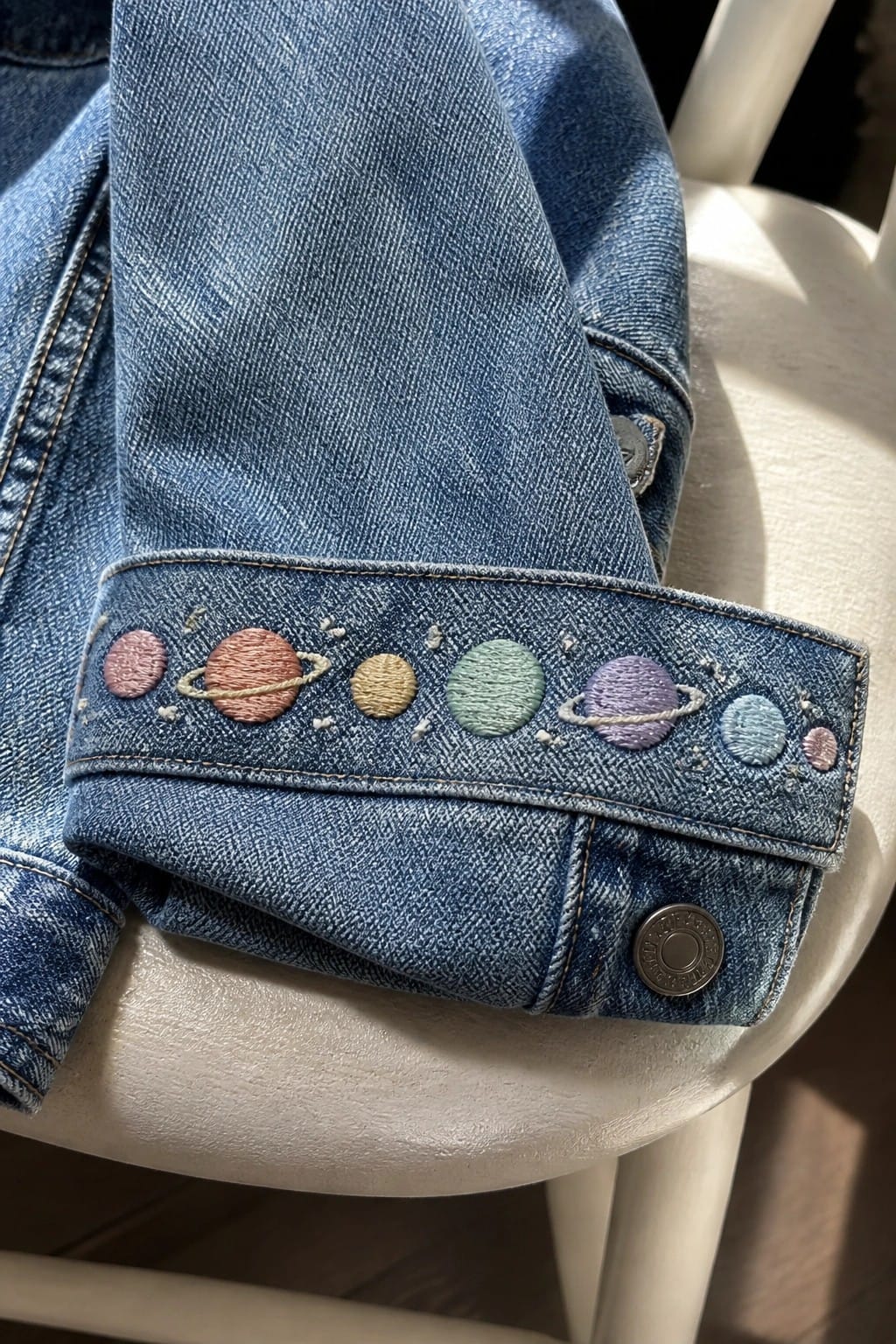
A row of small planets stitched across the cuff of a denim jacket creates a simple space-themed design. The planets sit in a straight line with a few scattered dots suggesting stars, and two of them include rings to add variety. The placement keeps the embroidery contained to the folded edge of the sleeve, which makes it visible when the jacket is worn without covering a large area. This approach works well on clothing like jackets, shirts, or even pants where you want a repeating motif that follows an existing seam or edge.
The small scale keeps the project quick to finish and easy to fit onto narrow fabric areas like cuffs or hems. You could swap the planet colors or change the order to match a favorite palette, or shrink the whole row further for a backpack strap or tote bag handle. On denim the thread colors stand out clearly against the blue background, but the same layout would also work on a lighter fabric if you want softer contrast. For clothing, this kind of motif stays practical because it avoids large solid areas that might stiffen with wear.
Crescent Moon Mask Embroidery

A crescent moon with a simple face forms the center of this design, with small stars and dots scattered around it on the front of a face mask. The light thread stands out against the blue fabric without crowding the limited space. This layout keeps the motif compact enough to fit an accessory while leaving the rest of the fabric plain.
What makes this idea useful is how the scattered placement avoids looking stiff on a curved surface. The same moon and stars would transfer directly to a small pouch, a hat panel, or the corner of a pocket. Switching the base fabric to a deeper shade would increase contrast, while keeping the thread light maintains the same scale and balance.
Hot Air Balloons Stacked on a Narrow Fabric Strip

A row of hot air balloons embroidered down a long narrow piece of linen makes a finished bookmark. Each balloon sits directly below the last in the same size and orientation, but every one uses a different set of thread colors and fill patterns to create variety. The tight vertical spacing keeps the strip balanced so it stays slim enough to slip inside a book without bulk. This layout suits small fabric projects like bookmarks, journal markers, or even tags for gifts.
The single-column arrangement makes it simple to finish one balloon per sitting and still end up with a complete piece. You can move the same balloons to a fabric keychain or the corner of a small pouch by shortening the strip and adding a loop. Changing the thread colors to match a set of books or a room palette keeps the design fresh without needing new stitches. The narrow shape also photographs cleanly for pattern sharing or quick gifts.
Ladybug Motifs on Baby Booties

Small ladybug designs worked in red and black thread turn plain baby booties into a quick personalized project. The insects sit on the outer side of each bootie so the shape stays visible whether the item is laid flat or worn. The compact scale of the motif matches the rounded surface of the knit without crowding the fabric. This placement suits infant clothing and small gift items where one clear element is enough.
What makes this idea useful is how the small motif adapts to curved knit surfaces without extra backing. You could move the same ladybug pattern to a onesie pocket or a hat brim by shortening the legs and spots slightly. Switching the bootie color to a pale blue would soften the contrast while the red and black still read clearly. The design stays effective on Pinterest because it shows a finished item rather than just a hoop sample.
Mini Terrarium Jar on Fabric
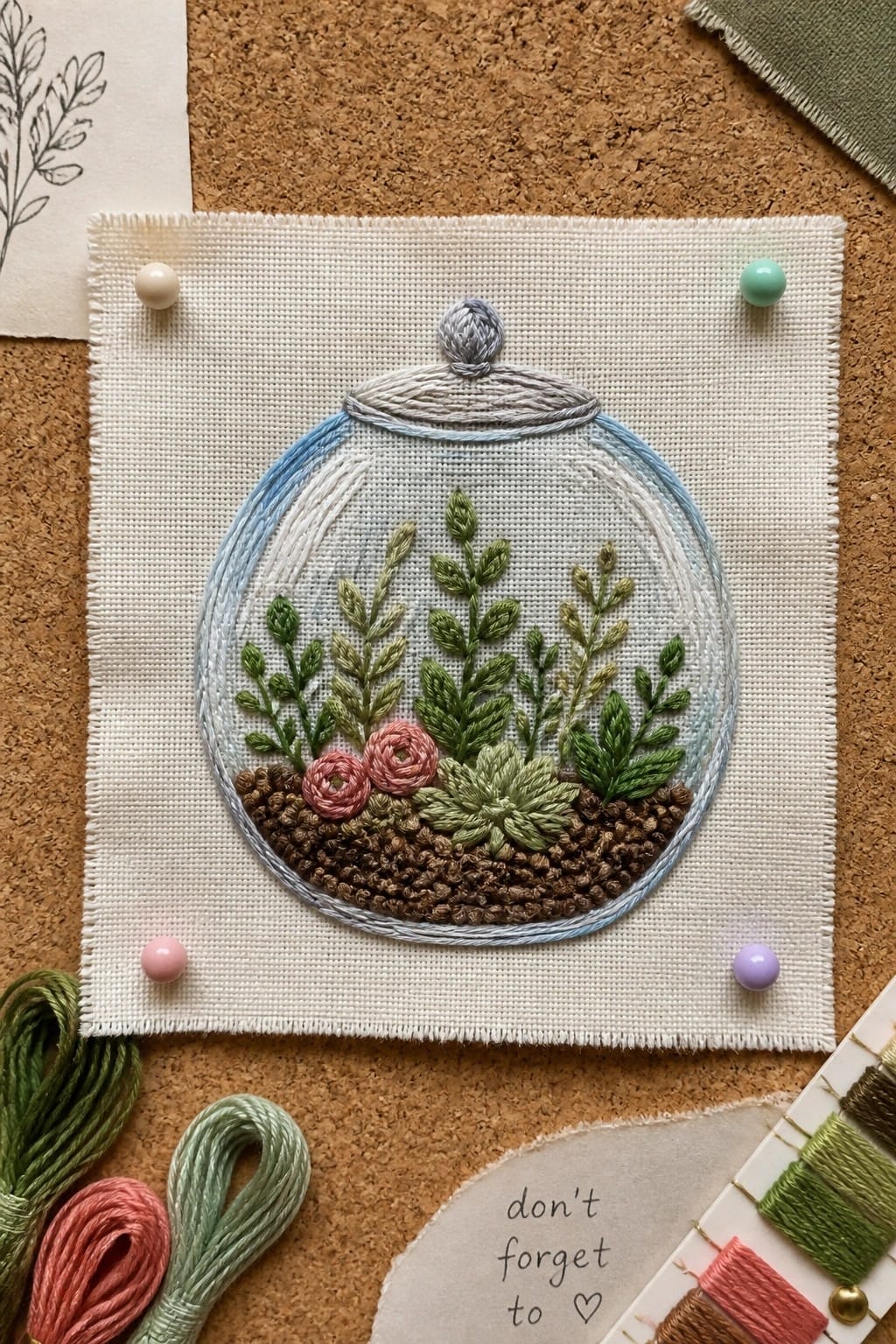
A round jar shape filled with layered plants makes a compact embroidery design. The bottom section uses dense brown stitches to show soil, while different shades of green build up succulents and leafy stems at varying heights. A soft blue gradient outlines the glass, and a small lid sits on top. This layout works well as a standalone hoop piece or as a patch that can be sewn onto a bag or jacket.
The placement keeps the whole scene self-contained so it reads clearly even at small sizes. You can swap the plant colors for brighter tones or change the jar outline to a different hue without losing the structure. The design also translates easily to a pocket on a shirt or the front of a small pouch. Scaling it down further lets you fit it onto a keychain or bookmark.
Pocket Boat Embroidery on Denim
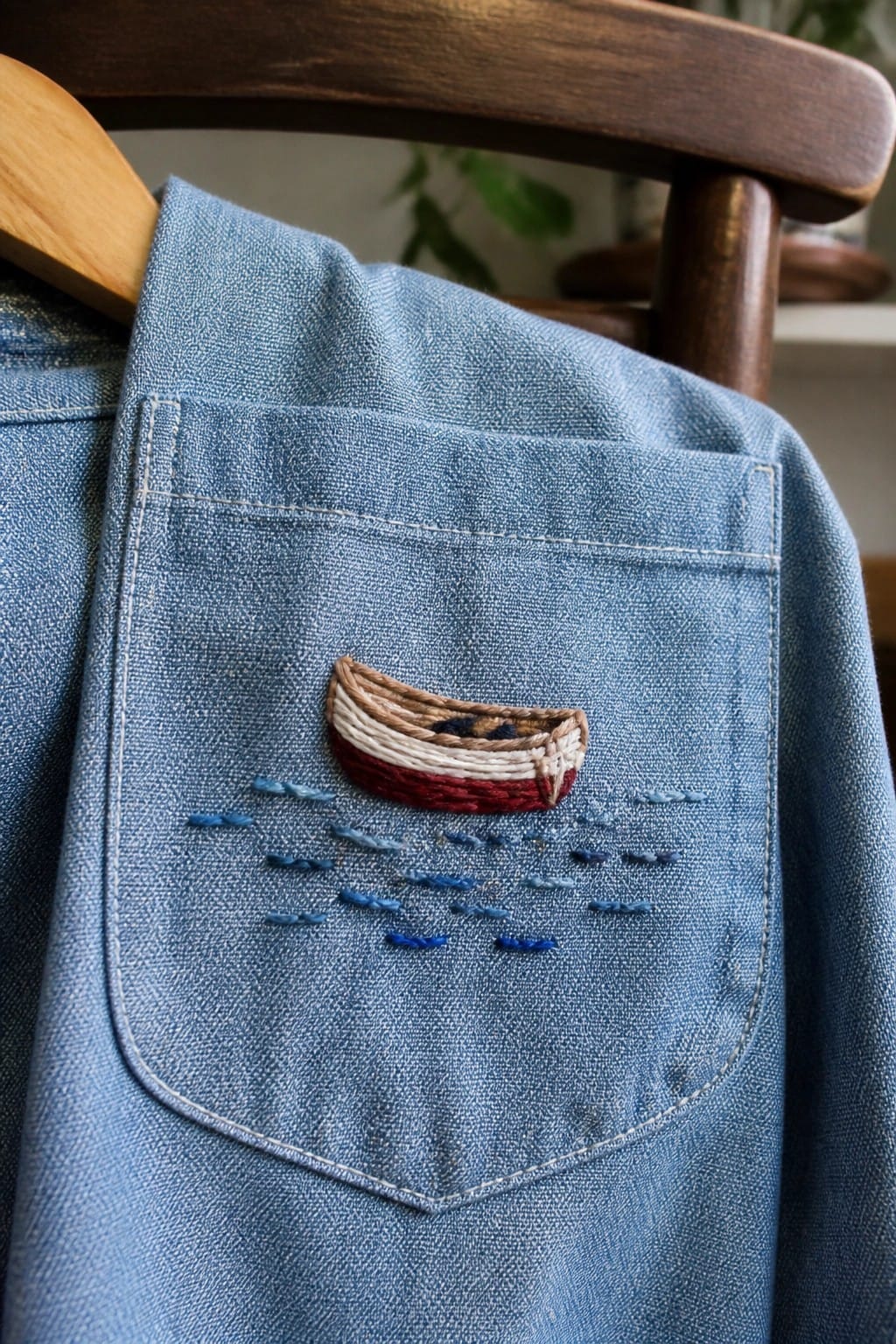
A small boat stitched in brown, beige, and red threads sits on the front pocket of a denim jacket, with short blue dashed lines below it to suggest water. The design stays compact within the pocket boundaries and uses the existing fabric color as the background. This keeps the motif simple while still readable from a short distance. The placement works especially well on jackets, shirts, or pants where the pocket already gives the design a defined space.
What makes this idea useful is how the pocket edge acts as a natural border, so you do not need extra stitching to contain it. You could shift the same boat onto the back pocket of jeans, a tote bag, or a shirt cuff by adjusting the water lines to fit the new shape. Changing the thread colors to match the garment keeps the look coordinated, while keeping the scale small makes it fast to finish. For clothing projects, this motif adds interest without covering large areas of fabric.
Mushroom Cluster on Table Linens

Embroider a compact cluster of two mushrooms with a single leaf and a few thin sprigs along the edge of a linen table runner or set of napkins. The motif uses a handful of brown and beige tones to separate the caps, stems, and leaf while keeping everything in a small footprint. Placing the design near the corner or hem lets the fabric remain mostly plain, which suits items that get folded or stacked. This layout works especially well on pieces meant for daily use rather than display hoops.
What makes this idea useful is how the loose grouping can be shifted onto tea towels, a bread basket liner, or even the corner of a pillowcase without crowding the space. You can repeat the same cluster in a row for a longer runner or shrink it further for a set of coasters. Changing the thread colors to softer greens or adding a third mushroom keeps the same balance while fitting different fabric tones. The small scale and simple plant elements make it quick to adapt across multiple projects.
Scattered Hearts and Crescent Moon on a Fabric Scrunchie

Embroidering a mix of small hearts in blush, cream, and lavender tones around a single crescent moon gives a simple repeating motif that fits the curved shape of a scrunchie. The design sits on gathered velvet fabric so the stitches follow the folds without needing perfect alignment. Tiny gold stars and dots fill the spaces between hearts, keeping the layout balanced while using very little thread overall. This approach works best on soft accessories rather than flat hoops or clothing panels.
The small scale makes it easy to finish in one sitting and transfer to other items like a headband or zip pouch. Changing the thread colors to match a different fabric base keeps the same layout but shifts the look completely. Placing the moon slightly off-center avoids a rigid pattern and lets the hearts sit more naturally around the curve. A version like this stands out in search results because it shows a clear finished project instead of just isolated motifs.
Layered Clouds on a Snap-Close Pouch
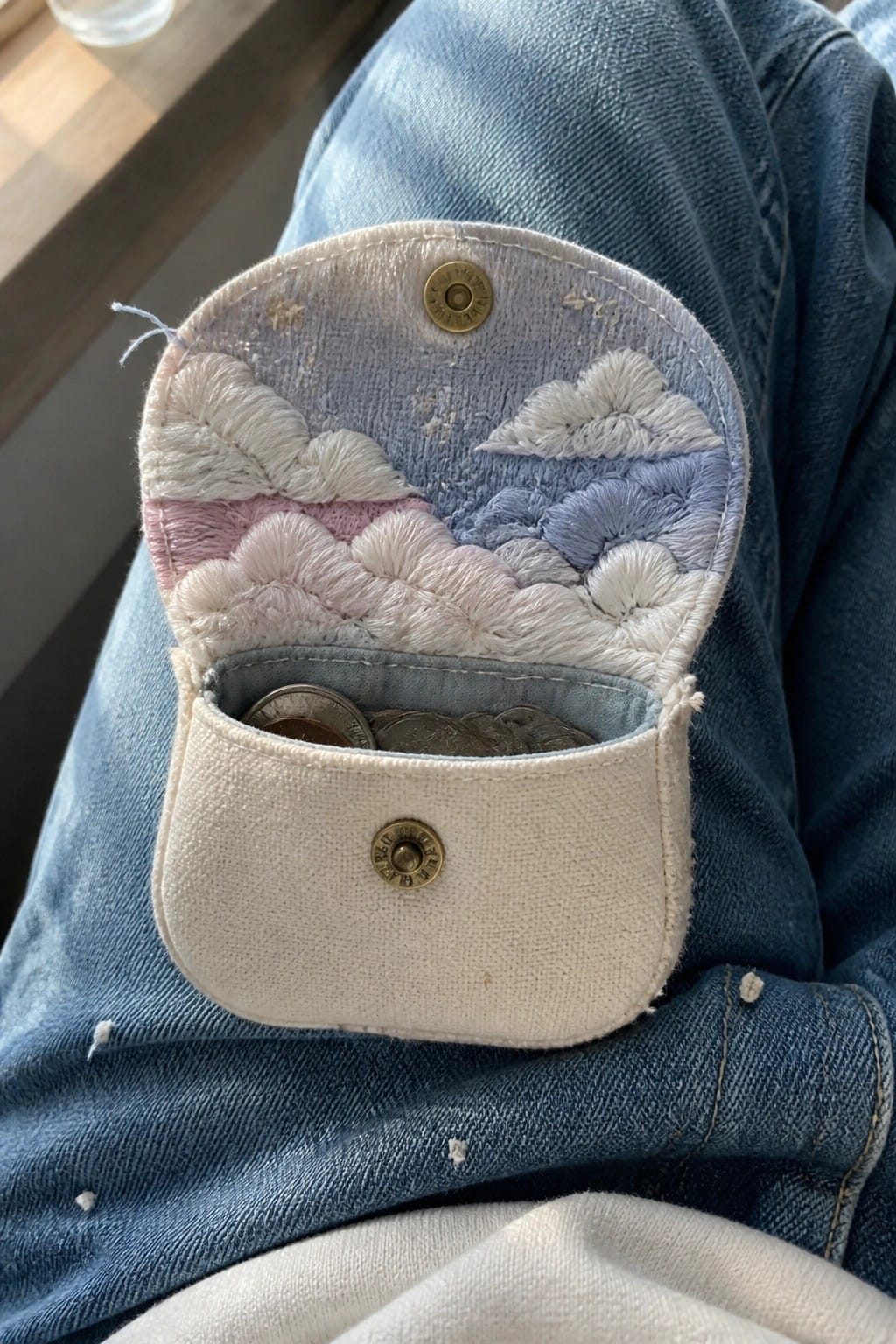
A row of overlapping cloud shapes in soft white, pink, and blue threads covers the flap of a small fabric pouch. The design uses stacked layers to create simple depth on a light canvas base that snaps shut. The pouch itself functions as a coin holder and attaches directly to clothing like jeans. This motif suits small accessories or added pockets where the embroidery stays compact and visible during use.
The small scale makes the project quick to finish while still showing the layered effect clearly. You could shift the same cloud layout onto a jacket pocket, the corner of a tote, or a belt bag by swapping thread colors to fit the fabric. Lighter shades keep the look soft on pale backgrounds, while stronger contrasts would help it read better on darker denim or canvas. A design this size also works as a standalone patch that can move between different items without much extra planning.
Owl on a Sweater Cuff

An owl perched on a short branch makes a compact motif that fits neatly across the ribbed cuff of a sweater. The design uses matching cream and gray tones so the stitching sits softly against the knit without fighting the texture. Leaves and twigs extend just far enough on either side to frame the bird while staying within the cuff width. This approach suits any ribbed edge on cardigans, pullovers, or even the hems of knit pants.
What makes this idea useful is that the cuff already gives you a ready border, so you skip the need for a hoop or stabilizer on most knits. You can move the same owl to a beanie brim, mitten tops, or the edge of a scarf by shortening the branch. Switching the thread to slightly darker tones would let it stand out on lighter yarn, while keeping the scale small prevents the design from stretching out of shape when the fabric moves. For clothing projects, this placement adds interest without covering large areas of fabric.
Frequently Asked Questions
What basic supplies are needed to begin these embroidery projects?
To get started with aesthetic cute embroidery ideas that promote calm you will need an embroidery hoop in a comfortable size such as six inches a set of embroidery needles in sizes seven to ten cotton or linen fabric in soft neutral tones and embroidery floss in pastel colors. Add a pair of small scissors a water soluble marker for tracing designs and an optional thimble to protect your fingers. These items keep the process simple and focused on creativity without extra distractions.
How can beginners approach the listed ideas without feeling overwhelmed?
Beginners should pick one simple design from the list such as a tiny flower or cloud shape and practice basic stitches like the backstitch or French knot on a small fabric scrap first. Break the project into short sessions of twenty minutes to build confidence gradually. Focus on the rhythm of the needle rather than perfection to keep the mood calm and enjoyable.
What techniques help maintain a calm creative mood during embroidery sessions?
Set up a quiet space with soft lighting and perhaps gentle background music to support relaxation. Breathe deeply between stitches and allow yourself to pause whenever tension arises. Choose designs with repetitive elements like leaves or stars that encourage a meditative flow and keep your floss organized in a small tray to avoid frustration.
Where can patterns or templates for similar cute designs be found?
Search free resources such as public domain illustration sites or embroidery focused blogs for printable templates. Many artists share aesthetic motifs on creative platforms that align with calm themes like nature elements or abstract shapes. Trace these onto your fabric using a light box or window for easy transfer without purchasing paid packs right away.
How should finished embroidery pieces be cared for to preserve their charm?
Gently hand wash completed pieces in cool water with mild soap if needed then lay them flat to dry away from direct sun. Iron on the reverse side with a cloth barrier to protect stitches and frame them in a hoop or mount on a canvas for display. This care routine extends the calming presence of your work in daily life.
