


I like keeping a few small embroidery projects on hand for quiet afternoons when I want to sit and stitch without a big commitment.
These patterns are simple enough that I can usually finish one in an evening while watching something light.
I chose designs that use basic stitches and don’t require too many colors or fancy hoops.
Most of them are small enough to fit in my lap and still look nice when they’re done.
I have made several of them myself and they feel like the kind of thing you can pick up without overthinking.
Smiling Cloud with Blue Raindrops Hoop

A small cloud motif stitched in off-white thread with a thin gray outline sits centered on plain fabric, with three short blue raindrops worked directly below the lower edge. The cloud includes simple eyes and a curved mouth to give it a face, and the raindrops are spaced evenly to keep the composition balanced. The design stays compact so it finishes quickly on a standard hoop size and reads clearly from a short distance. This works best as a finished hoop piece or as a motif you can transfer onto a small pouch or notebook cover.
What makes this idea useful is how little space the full design takes up, so you can drop it onto a pocket, sleeve cuff, or corner of a tea towel without crowding the fabric. Scaling the cloud down by half turns it into a repeating pattern for a baby hat or bookmark, while swapping the rain color to match the fabric lets the motif blend in instead of stand out. The empty fabric around the edges also means you can finish the hoop with minimal extra stitching if you want to keep the focus tight on the cloud itself.
Cherry Embroidery on a Jean Pocket
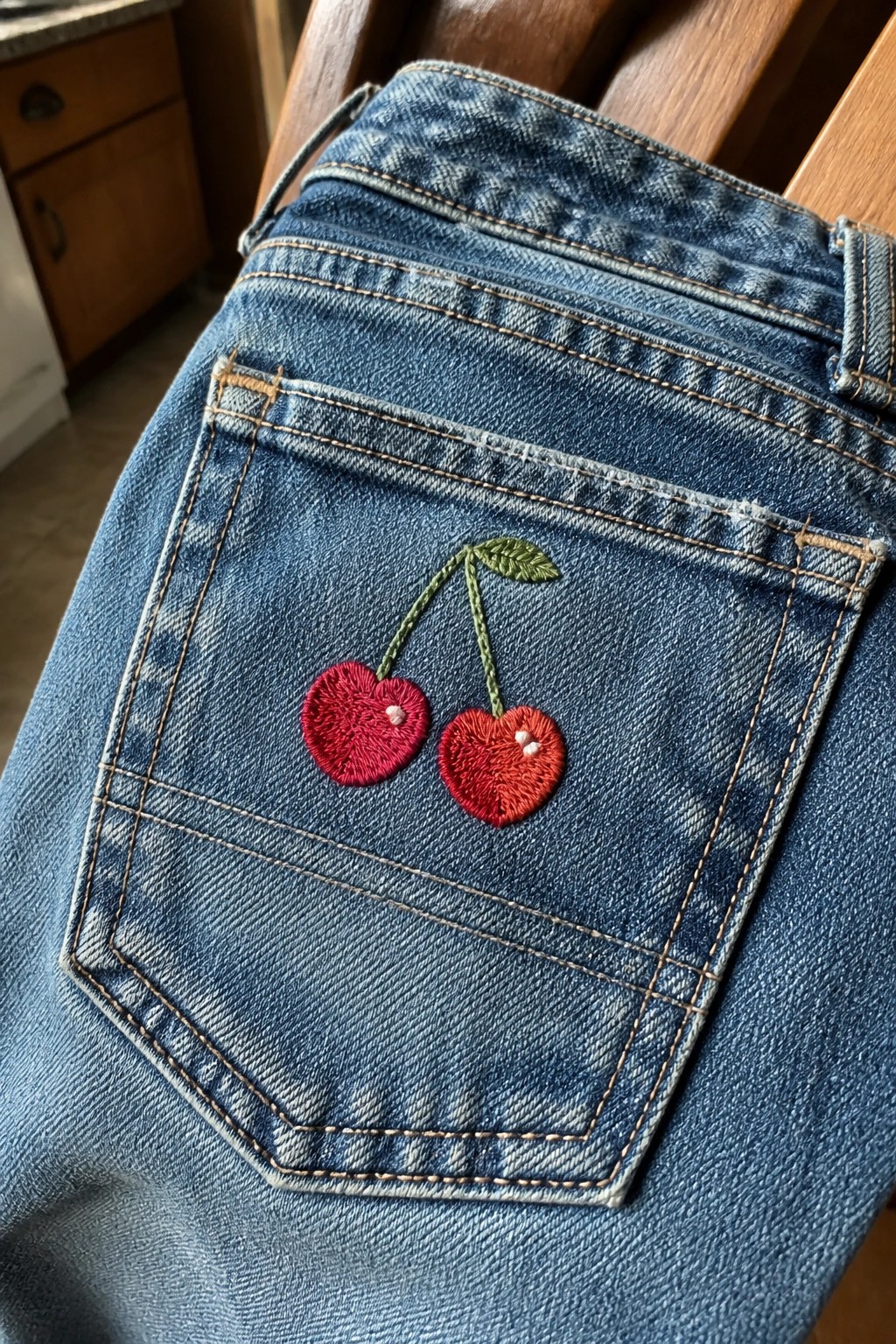
A pair of cherries works as a compact motif stitched straight onto the back pocket of jeans. The two red fruits sit side by side with thin green stems and one small leaf above them, keeping the whole design contained within the pocket area. The solid red against blue denim gives enough contrast to make the shape readable from a short distance.
What makes this idea useful is that the pocket already supplies a ready-made border and flat surface. You can repeat the same cherries on other denim pieces like a jacket or skirt by adjusting the stem length to fit the new space. Changing the fruit color to a different shade or swapping the leaf for a few stitches keeps the layout intact while fitting new fabric tones. The small overall size also means the project stays quick even if you add a second pocket on the same pair of jeans.
Moon and Sun Motif on a Shirt Collar
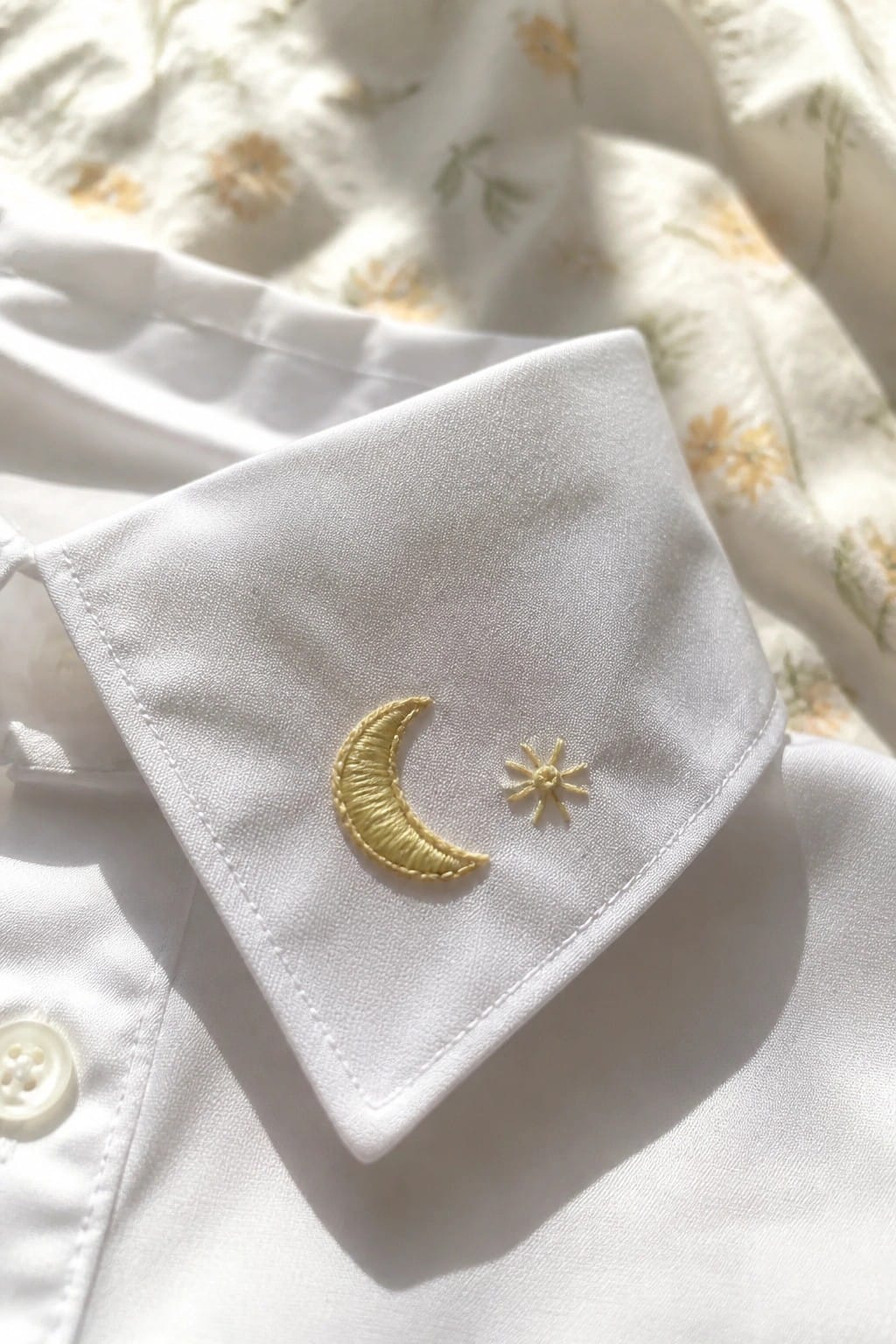
A small crescent moon paired with a simple sun sits on the tip of a white shirt collar, both stitched in the same yellow thread. The two shapes are spaced apart just enough to balance the pointed collar area without crowding it. Keeping the whole design under two inches wide lets the embroidery stay visible but not overwhelming on a wearable piece. This approach fits shirts, blouses, or lightweight jackets that get regular use.
The placement does a lot of the work here since the collar is already a focal point on most button-downs. You could move the same two shapes to a cuff, a pocket corner, or the edge of a canvas pouch and keep the same small scale. Switching the thread to a softer color would tone it down for pastels, while a darker shirt would make the yellow stand out more. The clean two-part layout also photographs clearly for project roundups because the shapes read from a distance.
Scattered Stars on a Fabric Scrunchie

Small star shapes placed along one side of a scrunchie give the fabric a light pattern that stays visible when the scrunchie is gathered. The stars sit close together with a few tiny dots added around them to connect the shapes without filling the whole surface. This layout keeps the embroidery compact so it does not interfere with the stretch or bulk of the fabric when the scrunchie is in use.
The small scale makes the design easy to finish in one sitting and simple to repeat on other hair accessories. You can change the thread colors to match different outfits or reduce the number of stars for a more minimal version. The same motif also transfers well to a headband or small pouch where the fabric stays relatively flat.
Daisy Bouquet on a Canvas Tote
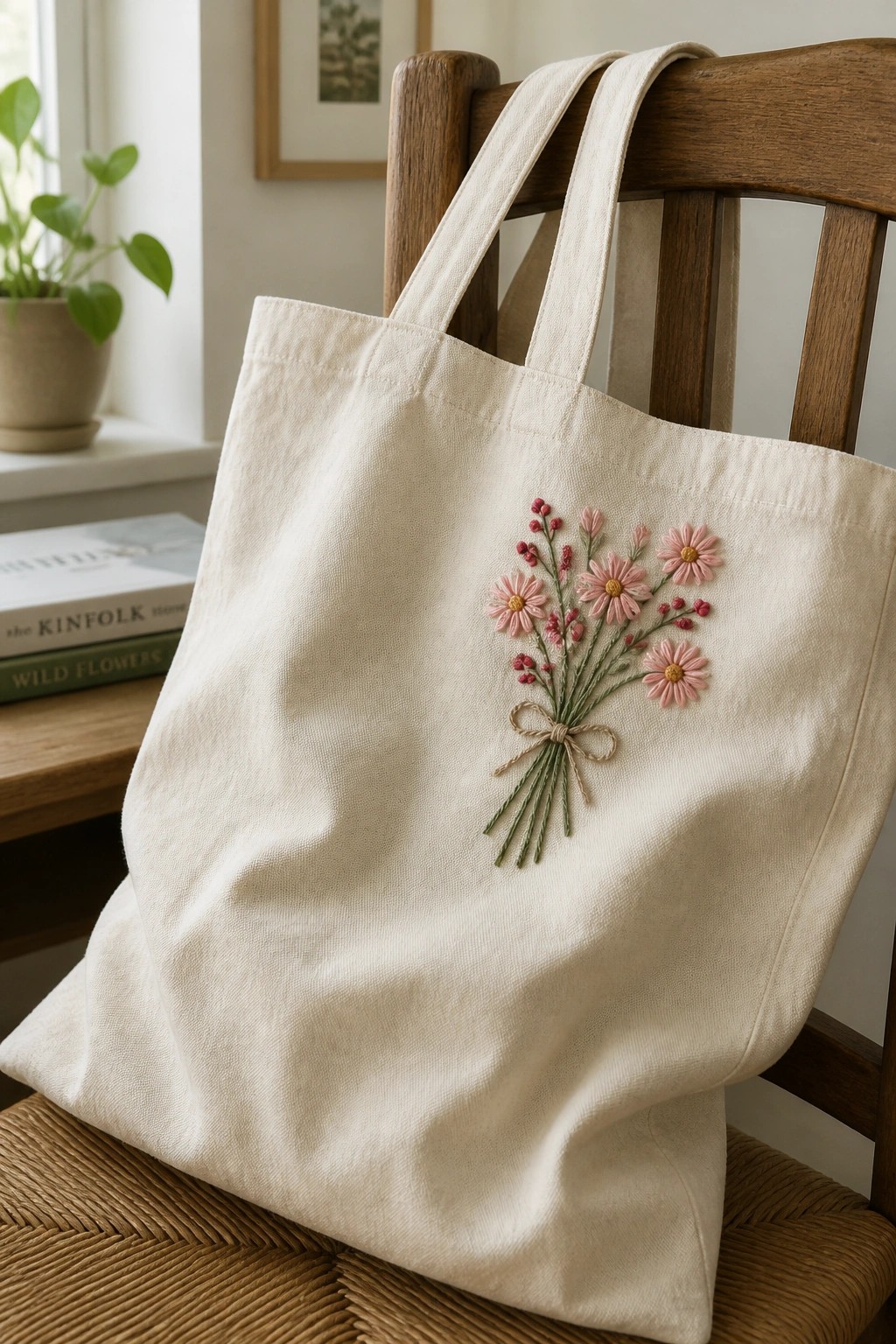
A compact bouquet of pink daisies with yellow centers and scattered red buds sits centered on the front of a plain canvas tote bag. The stems are grouped and finished with a simple tied bow that keeps the whole design contained in one small area. This layout works because the flowers stay clustered rather than spread out, so the motif reads clearly even on a large fabric surface like a bag.
A design like this works especially well on tote bags because the flat front panel gives the bouquet room without needing a hoop for the full piece. You could shrink the same motif to fit a smaller pocket or shift the colors to match different bag fabrics. The tied bow also makes it simple to adapt the design for other flat items like a makeup pouch or a book sleeve.
Mushroom Trio for Napkin Corners

Three small mushrooms grouped together create a compact motif that sits neatly in the corner of a white napkin or similar linen. The red caps with white dots stand out clearly against the fabric, while the white stems keep the overall shape tight and balanced. This approach keeps the design contained so it does not interfere with the rest of the item. It suits projects like napkins, handkerchiefs, or small kitchen towels where the embroidery stays functional.
What makes this idea useful is how the corner placement lets you finish the piece without covering much surface area. The same cluster works on a shirt pocket or the edge of a tea towel if you adjust the scale slightly. Changing the cap color to a different shade keeps the layout intact but changes the look for different fabrics. A design this contained also photographs cleanly for project sharing.
Donut Embroidery on a Canvas Zipper Pouch

A donut motif with pink icing that drips over the edge and scattered colorful sprinkles sits centered on a small canvas pouch. The brown outline and base fabric give the shape clear definition while the pink stands out as the main visual element. This works as a quick project on accessories that already have a neutral surface.
What makes this idea useful is how the round shape and simple color blocking translate to other small items like a makeup bag or the corner of a tote. Switching the icing to a different color or reducing the sprinkles keeps the same layout but changes the overall tone. The compact size also means it fits on most fabric accessories without needing extra space or complex planning.
Bee on a Denim Cuff

A compact bee stitched in black, yellow, and white sits centered on the folded cuff of blue denim jeans. The motif stays small enough to fit neatly on the narrow band of fabric while the thread colors create clear contrast against the wash. This turns a basic pair of pants into a piece with a visible detail that still reads as everyday clothing rather than decoration.
The placement does a lot of the work here because the cuff already folds and sits at the wrist, so the bee shows when the sleeves are pushed up. The same size motif transfers easily to a jacket pocket, the corner of a canvas tote, or the edge of a baseball cap. Switching the thread colors to match the garment tone keeps it subtle, while keeping the yellow bright makes the bee read from farther away on darker denim.
Whale Embroidery on Small Fabric Squares

A basic whale shape in solid blue thread sits centered on each square of off-white linen fabric. The body uses dense stitching while the spout above is formed with lighter blue dots and lines for a simple contrast. This motif works best on small finished pieces like coasters, napkins, or patches where the compact scale keeps the outline easy to read. The white underbelly detail adds a bit of separation without complicating the overall shape.
What makes this idea useful is how quickly the same outline repeats across a stack of squares in one sitting. The compact size adapts well to bookmarks, pocket patches on clothing, or corner accents on a baby blanket by shifting the placement slightly. Swapping the blue thread for other colors lets the design match different fabric backgrounds without changing the stitch work. On Pinterest this kind of clean single-motif square stands out because it reads clearly even in a thumbnail.
Coffee Cup Motif on a Kitchen Towel

A coffee cup design stitched near the bottom edge of a towel lets the cup sit in a visible spot when the fabric is folded or draped. The cup is worked in tight, dense stitches that give it a solid shape while the steam lines curve upward in a lighter thread to keep the motif balanced. Two small bean shapes sit beside the cup to anchor the lower part of the design without adding bulk.
What makes this idea useful is how well the same layout fits on other kitchen linens like napkins or a hand towel set. You can shrink the whole motif by a third and move it to a pocket or corner without losing the steam detail. Swapping the cup color to a soft gray or warm brown changes the feel while the placement stays the same. The simple vertical flow also works on a Pinterest board because it reads clearly even in a small thumbnail.
Rainbow Arch with Cloud Ends
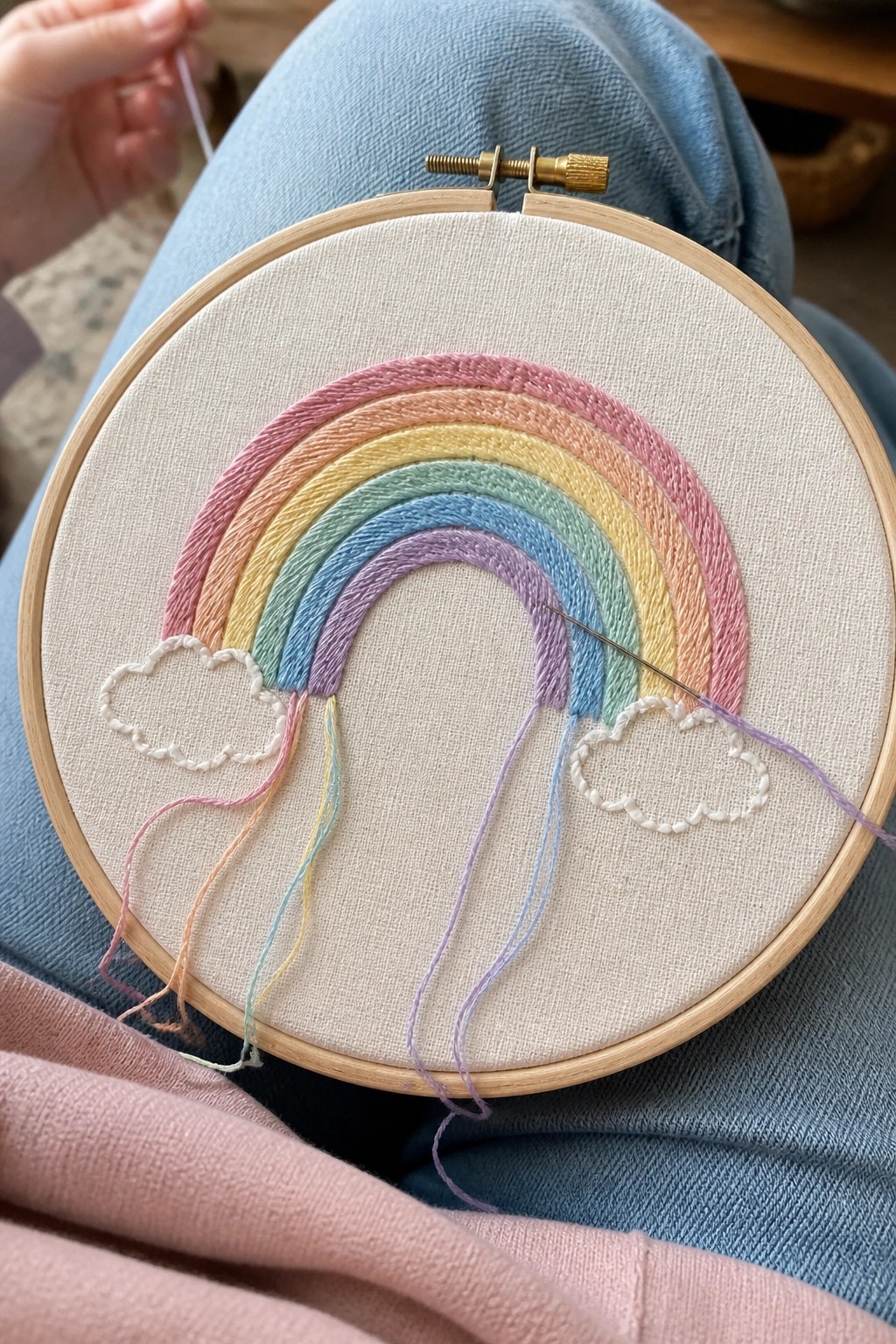
A rainbow built from curved bands of pastel thread arches across the fabric inside a hoop. White cloud shapes sit at each end of the arch, with several loose thread strands hanging down from them. The design uses the natural curve of the hoop to keep the layout balanced and quick to stitch. It suits small finished hoops or fabric patches that can be turned into bag accents or jacket details.
The placement does a lot of the work here because the arch fills the circle without extra border stitching. You could shrink the whole motif to fit a pocket or move the clouds closer together for a narrower frame. Changing the thread colors to match existing clothing keeps the same layout but makes it feel more personal. The hanging strands give the piece movement that stands out in photos without needing extra layers or texture.
Paired Strawberries on a Backpack Pocket

Two small strawberries stitched side by side on the front pocket of a canvas backpack give a simple, repeatable motif that reads clearly from a distance. The red fill with green tops and yellow seed dots creates enough contrast to stand out on light fabric without needing extra outlining or shading. Keeping the design compact means it fits neatly below the zipper and finishes fast on a portable item like a bag or pouch rather than a large hoop.
The placement already uses the pocket seam as a natural boundary, so you avoid extra measuring when starting. You could scale the same pair down for a coin purse or shift it higher on a tote for a different balance. Swapping the red for a softer pink or adding a third berry changes the look without adding much time. This kind of compact repeat shows up well in project roundups because it translates easily to other small fabric surfaces.
Fox Face Hoop Project

A fox face stitched in solid orange thread with lighter sections for the muzzle and inner ears creates a clean, graphic look inside a small wooden hoop. Black dots for eyes and a simple nose keep the design minimal while the directional stitching gives the fur some texture. This motif works well as a standalone hoop piece or as a quick motif that can be moved onto other fabric items.
What makes this idea useful is how the compact size lets you finish it in one session and then use it as a patch on a bag or jacket. Scaling it smaller would suit a beanie or scarf, while keeping the same color split but switching the orange to gray would turn it into a wolf version for variety. The high contrast between the thread and fabric helps it read clearly even from a distance, which is why similar animal faces perform well when people search for easy hoop ideas.
Potted Cactus Circular Patch

A small potted cactus works well as a standalone motif stitched inside a bordered circle of fabric. The main stem and side arms use layered greens to show depth, while the orange pot sits at the bottom to anchor the design and balance the pink flowers on top. Keeping the entire piece within a round edge makes it function as a patch rather than a hoop piece.
What makes this idea useful is how the contained circle lets you move the finished embroidery onto a backpack, jacket, or pouch without extra framing. You can change the pot color or flower count to match different fabrics while keeping the same layout and scale. The compact size also means the project stays quick to complete even if you add a few extra stitches for texture on the arms.
Ice Cream Cone Motif on Canvas Sneakers

A small ice cream cone works well as a single motif embroidered onto the toe of a canvas sneaker. The pink scoop sits above a brown cone worked in a grid pattern, with two small dots added as sprinkles. Keeping the whole design under two inches lets it fit neatly on the curved surface without stretching or puckering the fabric. This approach suits shoes, bags, or any small fabric item where you want one focused accent rather than a larger panel.
What makes this idea useful is how the compact size translates to other placements like a jacket cuff, a backpack corner, or even a fabric pouch. You can change the scoop color to match different outfits or swap the cone for a simpler triangle shape if you want less detail. On light canvas the threads show up clearly, but the same motif holds up on denim or twill with a slightly thicker thread. It also converts easily to an iron-on patch if you prefer stitching on a separate piece first.
Dinosaur Embroidery on a Baby Onesie

A basic dinosaur shape stitched onto the chest of a baby onesie creates a clear focal point without covering too much fabric. Green thread fills the body while a row of orange stitches forms the spikes along the back, keeping the whole design small enough to finish quickly. The centered placement on the front works because it stays visible when the garment is worn and fits the limited space of infant clothing.
What makes this idea useful is how the compact size transfers easily to other baby items like burp cloths or small hats. Swapping the green for a different color lets the same outline match various outfits or create matching sets. On clothing, this motif stays practical since it avoids dense stitching that could feel stiff against skin. Scaling the dinosaur even smaller would suit a pocket or sleeve accent if you want to repeat the project on multiple pieces.
Pastel Hearts Spaced Across a Fabric Strip

A straight row of small hearts in five different pastel shades creates a simple repeating pattern down the center of a narrow rectangle of fabric. The hearts sit evenly apart with consistent spacing that keeps the design balanced without crowding. This layout suits a bookmark, a glasses sleeve, or a thin pouch because the long shape lets the row stretch out naturally.
What makes this idea useful is how quickly the same hearts can move to a different project like a pencil case flap or a tote strap. Shortening the row to three hearts works on a smaller item such as a coin purse while keeping the same color order. Changing the background fabric to a darker linen would make the soft thread colors stand out more clearly.
Planet Motif on a Fabric Keychain

A small circular planet with rings works as the main design on a fabric keychain. The blue threads build up the planet in tight circles while a single gold line forms the rings across the center. This layout keeps the whole piece compact and balanced so it reads clearly even at keychain size.
What makes this idea useful is how the round motif fits the shape of the finished item without extra framing. You could shift the same design onto a coin purse, a luggage tag, or a small patch for a jacket. Swapping the blue for other colors or shrinking the rings changes the look without altering the basic stitching. The small scale also means the project stays portable and finishes fast.
Frequently Asked Questions
What basic supplies do I need to start these quick embroidery projects? You will want a small embroidery hoop sized between 4 and 6 inches, embroidery floss in a few cheerful colors, a pack of embroidery needles with large eyes, a pair of small scissors, and plain cotton or linen fabric. Many of the projects also call for simple items like felt scraps or buttons that you can often find around the house.
Are these projects suitable for complete beginners? Yes, each one uses only basic stitches such as backstitch, satin stitch, and French knots. Start with the simplest designs that use just two or three colors and practice the stitches on a scrap piece of fabric first. The short time frame helps you finish before frustration sets in.
How can I keep the process relaxing instead of turning it into a race? Choose a comfortable chair with good lighting and put on music or a podcast you enjoy. Work in a small hoop so your hands do not tire, and stop to stretch your fingers every ten minutes. Remember that these projects are meant to be finished in one calm session, not perfected under pressure.
What can I do with the finished pieces once they are complete? Turn them into patches for jackets, ornaments for the holidays, or framed wall art for a desk. You can also sew them onto tote bags, pillow covers, or even the corner of a tea towel to add a personal touch to everyday items.
Where can I find simple patterns if I want to try more designs later? Free patterns are widely available on craft blogs and sites like DMC or Etsy by searching for “one hour embroidery.” Many designers offer downloadable PDFs that match the style of quick projects, so you can print them and transfer the design with a pencil or water-soluble marker.
